Showing posts with label books. Show all posts

Sunday, March 25, 2012

Comic Book Villains Ripe For D&Dification

Dr DoomVictor Von Doom of Latveria is periodically made medieval in actual Marvel comics. Evil knight behind perforated mask with a few magic-user levels. And he already has a castle with a map. Go nuts.


The Time Trapper.
Who is the Time Trapper? Click to enlarge...
"It is known that the Time Trapper dominates the wasteland of Earth in its dying millennia....He possesses great armies and weapons of power, the source of which are unknown"

And he looks like that. So you don't even need to change his costume.

He can age you or de-age you or send you through time or whatever.

Just don't remind him how things used to go back in the day.


Dr Fate When He's Bad
Dr Fate is what DC comics has instead of Dr Strange. He gets his powers from an ancient Egyptian helmet so naturally there are lots of stories where someone bad gets the helmet.
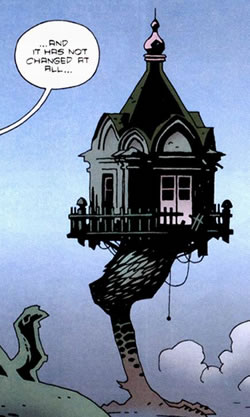
In a Keith Giffen miniseries he makes a demon mouth appear in mid air and projectile vomit raw eldritch plasm on Batman fucking killing him.In a Neil Gaiman future story the Fate helmet becomes all corrupt and old and vampiric and suchlike. It sits in a neoEgyptian temple being all...
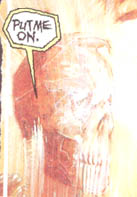
...and then some idiot does and then Fate uses the poor bastard's mouth to deliver the following critique of Gygaxian cosmology: "Order. It's offal. Chaos. It's garbage. They were just different names for the same thing: The gurgle, ooze, purl and spurt of protoplasm, deluding itself that there's meaning. There is no meaning. Just the flesh. And death. And..." then the helmet sucks the life out of the guy wearing it falls to the floor and it lays there being gross.

Artifact or relic? Hmmm...

The Demon Bear that fought the New Mutants...

It's a demon. It's a bear. Need me to draw a map?

Shuma Gorath
Maybe Shuma-Gorath is cheating--the name is from RE Howard and the rest is pure Lovecraft, but there's something about the platonic tentacle-eyeball-nothing-else simplicity of old S-G that's terribly appealing. And why not give Gorath the same schtick as...

Starro The ConquerorNow, of all the possible individuals who might try to take over the world by having small duplicates of themselves climb onto everyone's face, Starro is maybe less my first choice than, say, Scarlet Johannsen, still, Starro is pretty cool.So cool I had a Starro attack the PCs at sea a couple weeks ago...
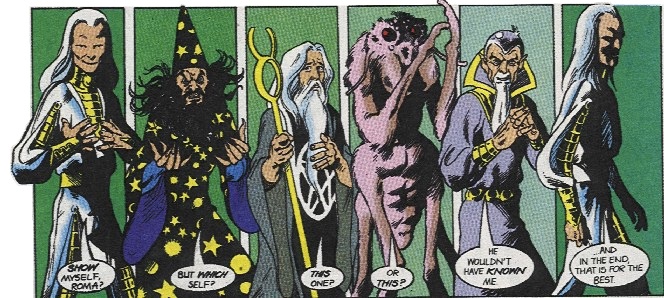
Marvel's Merlyn
In the case of Alan Moore's take on a manipulative, time-travelling, dimension-hopping Merlyn, a picture is worth a thousand words...
'

The Mindless Ones
They're big and tough and zap you and are from another dimension. Also they have no minds. Their "No. Appearing" figure is pretty grim.

Malekith The Accursed
What If... Robert Plant was a dark elf sorcerer in crazy warpaint who unleashed the Cask of Winters? Then you would be playing some excellent D&D is what. So enjoy that.

The Beast


Not not the blue guy who goes "Oh my stars and garters"--the creature from the Elektra: Assassin miniseries that's worshipped by ninjas and possesses people via evil milk. Also possessed of a fairly impressive traditional claw claw bite routine.

Mordru
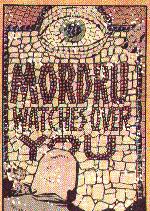
There isn't that much that's special about Mordru per se--he's just another in a long line of beardy wizards--but that issue of Legion of Superheroes (the "Mordru-verse" issue) where he establishes complete Orwellian dominion over Earth using technomagical surveillance and controls all the other villains is pretty sweet.

Earth X Uatu
The gorgeous dysversal Earth X miniseries used Machine Man's origins in the old 2001:A Space Odyssey comic series as a backdoor to bring in a lot of visual references to Kubrick's film, but none more memorable than John Paul Leon's image of Marvel Comics omniscient, objective Watcher as a crippled, corrupt version of the 2001 Starchild collapsing under the weight of his own big smug overevolved head.

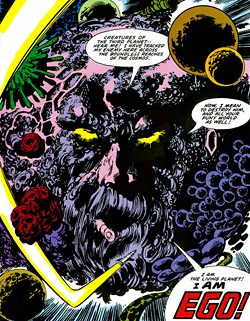
Ego, the Living Planet

Speaking of big heads. Got the All-My-PCs-Are-Level-20 blues? Have them fight a planet.

Klarion the Witch Boy
He's disturbing and so is his cat.


Etrigan The Demon + The Gargoyle

He's a duke of Hell, he speaks in rhyme and his soul is wedded eternally to an unfortunate scholar named Jason Blood. The only thing not totally D&D about Etrigan is his technicolor outfit...But that's easily fixed by saying he dresses like Marvel's similar-looking-but-less-cool-acting Gargoyle...
Sunday, March 18, 2012

Do Your Dumb Thing

This summary is not available. Please click here to view the post.

Sunday, January 29, 2012

Now That's A Monster Entry

They are called MONKEYS (Simia) in the latin lan-
guage because people notice a great similitude to human
reason in them. Wise in the lore of the elements, these
creatures grow merry at the time of the new moon. At
half and full moon they are depressed. Such is the nature
of a monkey that, when she gives birth to twins, she
esteems one of them highly but scorns the other. Hence,
if it ever happens that she gets chased by a sportsman
she clasps the one she likes in her arms in front of her,
and carries the one she detests with its arms round her
neck, pickaback. But for this very reason, when she is
exhausted by running on her hind legs, she has to throw
away the one she loves, and carries the one she hates,
willy-nilly.

A monkey has no tail (cauda). The Devil resembles
these beasts; for he has a head, but no scripture (caudex).

Admitting that the whole of a monkey is disgraceful,
yet their bottoms really are excessively disgraceful
and horrible. In the same way, the Devil had a founda-
tion when he was among the angels of heaven, but he was
hypocritical and cunning inside himself, and so he lost
his cauda-caudex as a sign that all of him would perish
in the end. As the Apostle says: 'Whom the Lord Jesus
Christ will kill with the breath of his mouth'.

'Simia' is a Greek word, meaning 'with squashed
nostrils'. Hence we call monkeys this, because they have
turned-up noses and a hideous countenance, with wrinkles
lewdly puffing like bellows. It is also said to be a charac-
teristic of goats to have a turned-up nose.

Cercopitheci1 do have tails. These are the only ones
to be discreet, among those previously mentioned.

Cynocephali2 are also numbered among monkeys.
They are very common in Ethiopia. They are violent in
leaping and fierce in biting. They never get tame enough
not to be rather ferocious.

Sphinxes' also are reckoned as monkeys. They are
shaggy, defenceless, and docilely ready to forget their
wild freedom.

1 Aidrovandus says that the English is 'marmuset'.

2 The Baboon, the dog-headed ape, possibly the Egyptian god Anubis.
According to Gesner, the sphinx is a real monkey, and the Sphinx of art,
woman in front and lion behind, is merely an imaginary representation of
it made by painters and sculptors. Perhaps he is not so wrong in this as he seems.

At any rate, the Guinea Baboon is called a sphinx to this day.

A note on fabulous animals will be found in the Appendix.

From Bestiary: A Book of Beasts by T.H. White

Well worth it and all on-line here courtesy of the University of Wisconsin.

Thursday, January 26, 2012

Secrets Of The Chill Master Revealed!

So where was that mystery passage from?

Guesses have included: Roberto Bolano, Gabriel Garcia Marquez, Carlos Castaneda, and Thomas Pynchon pastiching one the above.

Actually it was from Terevaldo Roberto Flechero L'unares' second novel.

Now Terevaldo Roberto Flechero L'unares is not merely an author of fiction, but (Borgesially enough) a fiction himself: an imaginary author whose work appears in the Vampires supplement for 2nd Edition of the horror RPG Chill.

Which is to say that passage was actually written by either Gali Sanchez or Drake Mallard, the authors of said sourcebook.

More to my point today, this passage pretty much encapsulates 2nd ed Chill.

On the one hand: it's kinda good, isn't it? Like it isn't maybe mad genius, but the ideas and execution are not just at "frustrated novelist" (which is like what you're called at 0-level if your class is Game Designer) but actually maybe even buzzing hummingbirdally up near "actual novelist".

I mean, it could give you genuine nightmares. And I love the bit about the transistor radios.

On the other hand: What the fuck does all this humid glitterball poetry have to do with a game, Chill Vampire Sourcebook?

And therein lies the glossy black vein of pre-White Wolf retropretension that is Chill 2e. Copyright 1990 and looking every inch of it. If, in looking through it, we can undeniably ascertain that it is not only Retro (now as it was not then) and Pretentious (as anything subtitled "A Scary Game For Scary People" could not hope to not be), but also Stupid, then we will know that Chill is perfect.

-Cover: Color pencil drawing of threatening version of masky Montreal opera clown in blue and orange instead of the traditional purple and pastel. Beneath ransom note.

-I like the layout of the table of contents: it reminds me of the menu for an upscale Washington DC restaurant where they have wrought-iron chairs out on the patio and an awning in racing green and all the drinks have olives in them.

I mean, fuck off if you want to know which of the 43 pages under "character generation" contains the 'taxi driver' career, but it looks nice.

-Quote from some made-up author named "Robert Davidson" who is not HP Lovecraft about the nature of fear. (Not-being-Call-of-Cthulhu is a major theme of Chill. As is Vampire The Maskthingy not existing yet.)

-Another aspect of Chill: artists who are almost Bill Sienkiewicz but not. More than one. Though one of them has a side of not-exactly-that-Hollywood-caricature-guy-who-works-his-daughter's-name-into-everybody's-face next to his Sienkiewiczwich.

-Beginning of the book: "If you've never played a roleplaying game, or if you haven't read the 32 page Introductory Insert in the back pocket of this book, you'd better stop reading now." (emphasis fucking mine). 32 pages is half of Vornheim. 32 pages is longer than Vault of the Drow. 32 pages could get you introduced to most of Western philosophy and all of Greek cuisine and still have room for house ads. Anyway fuck me because this pdf doesn't have it. But boldly I soldier anyhow...

-"Now that you’re ready to begin, you’ll probably want to know what’s in this CHILL book. Well, hang on to your. .. dice! We’ve got brain worms. We’ve got gorillas. We’ve got scientists, yetis, and monkeys. Thieves, mystics, and reporters. Gazelles, bears, and alligators. And, of course, flies, rats, mummies,werewolves,vampires...you name it!"

First: "hang on to your...dice!" Hah, we fooled you! You thought we were going to say "hat"!

??

Second: Isn't this suddenly sounding like a Hellboy RPG?

-"The second section of this book contains the mechanics of the game: both the players and Chill Master (CM) should read up on..."
Yes, that's right, if you're running this game, your players have to call you The Chill Master. Which is ok by me because that's what everyone calls me anyway.

This guy is totally The Chill Master.


-Like Cthulhu, skills are on an easy-to-grasp 0-100 scale. (Knowing you have photography at 45% tells you a lot more than having photography at +3. +3? Is that good? Is it like Lois Lane good or William Eggleston good?) Unlike CoC and its Chaosium Basic Roleplaying ilk it also has ability scores (strength, health...) on the 0-100 scale. While this has a pleasing surface simplicity and many a CoC or Runequest player mayhap has wondered why their system didn't do the same thing, the gears grind a bit when you do it this way, as we shall soon perceive...

-The basic abilities chosen seem pretty well picked for a horror RPG--Dexterity is like fingeriness and Agility is like jumpiosity and then Luck, Perception, Personality, Stamina and Willpower. You can instantly think of situations in horror movies where any of these things matters. No "intelligence", which I do hope is a nod to "player-skill-not-character-skill"

-Willpower is a depletable stat, like hit points. This is not quite as nice as Sanity Loss in CoC but the idea has legs.

-Some dipshit named 'Rax' who is, I believe, never identified is periodically quoted talking like Eddie from Iron Maiden and going on about lickspittle and mantasting and generally failing to scare me.

-The crippling late-Silver-Ageness of the system comes into play with skills: first of all, the base number for each skill is often some derived crunch nightmare of mixed ability scores (Climb is the average of your agility, perception, stamina and strength f'rinstance), second of all the system doesn't have just pass/fail, with fumble and impale for rolling really high or low, it also has a degrees of success system: Low Medium High Colossal.

Dig the madness--"T#" stands for "target number" (usually like 45 if the skill is at 45):

The following chart summarizes results of Specific Checks:

L result =T#through (T#-tens digit) +I
M result = tens digit through (T# t 2) + 1
H
result = T#t 2 through tens digit + I
C result = I through tens digit

And on top of that, the target numbers are variable to begin with. So you don't just go "you have to pass a check at minus 20", but "you have to pass a check at minus 20 and then get higher than an 8th of the tens digit plus a 4th of the twelves digit and fuck is this math really easier than just going HEY THE BETTER YOU ROLL THE MORE INFORMATION YOU GET OUT OF LITTLE SALLY ABOUT THE BAD DOLL THAT TRIED TO STEAL HER HAIR, JUST GM IT YOU FUCK"


-Oh and why is it bad to have the ability scores on the same 0-100 scale as the skills in this here modern skillheavy system?

"Using The Skill List:
The CM must be familiar with the following list of (like 80) skills to prevent players from using simple Ability Checks to allow their characters to perform actions that require skills"

So while yes, it is as crunchily satisfactory as a Snickers to have your Martial Arts score actually related to your Strength and Stamina scores (unlike in CoC)--actually getting all that math to work together is harder than it might seem. Either character generation is long and mathy (Runequest), skills are always higher than associated ability scores and quickly reach superhuman (any "+1" system), or some other weirdness. Skill-based systems claw at the soul.

-The lack of a straight-up Intelligence stat makes the ability-derived skill system a little wonky, too, like your Art Criticism skill is derived from Perception and Willpower. Though, honestly, having done a bit of it I can see that: must...look at..terrible...Felix...Gonzalez...Torres...sculpture before..deadli...zzzzzzzz.

-Almost every skill has a special spell-like mechanic attached to it. The bowfire rates are under the bow skill, f'rinstance. Explosives have an even-odd result on top of the degrees-of-success result. Okay, I like that one.

-So anyway point is clunky.

-The scariness advice in the GM section is excellent, though. Every Halloween somebody asks me how to write a scary adventure, it's all here: Isolation. Mystery. Reversal. Tease. Fuck with sensory information. Unexpected sound effects.

-(Well almost all, here's another tip: Find an emotion adjacent to fear--dislike, anxiety, disgust, confusion, etc.--and worm your way in from there.)

-Interesting/surprising highlights in the (basically unarguably classy and extraordinarily tasteful and loaded with stuff like Dracula and Rosemary's Baby) recommended reading/viewing section include:

WILLIAM GIBSON (?)
ANY UNIVERSITY ABNORMAL PSYCHOLOGY TEXT
BLUE VELVET
ERASERHEAD
THE HUNGER
Brazil
Doom Patrol (and the rest of the DC Vertigo line--so maybe this was just because Mayfair was also publishing the DC Heroes RPG)
Grendel (the comic book)
Blood (Epic Comocs)
Creatures on the Loose (Marvel Comics)(notable to me because I have never heard of this comic. You know how I often I go "I have never heard of this comic?" Not often.)

Not Present for Predictable But Still Kinda Funny Reasons:

H.P. Lovecraft

-But are the monsters good? Yes, here's the Mean Old Neighbor Lady:

If the child escapes and returns home, he finds to his terror that his parents do not recognize him and return him gladly to the neighbor lady who comes asking about her “nephew who’s visiting from out of town.” “I’ve been worried about the little tyke,” the creature explains, “because of that wild imagination.”

The creature keeps the child in the darkness of the cellar, taunting him with playthings that “you can’t play with because you’re bad,” starving the child, and threatening to send the dog down into the cellar if the child cries or makes any noise. The child’s Willpower sinks from fear and hunger, until at the equinox (mid-March or mid-September), the neighbor ladv completes it wicked act by using the Minion Discipline: the child becomes a gamin, and is released to wander into nearby homes, where it begins its evil game of “murder.”

AaaaaaH!!

-..1)Although the creature does not suffer normal

physical damage, it does take wounds from eggs
used as thrown missiles.

Nice.

-And then there's Puppet People: made of wood, with a thin covering of flesh and they always hunt in pairs "The origin of these perverse creatures remains a mystery; all that is known for sure is that they are nasty and incredibly ignorant."

-And, of course Werejaguars. What a wonderful word. Werejaguar.

-CoC is a horror game and Chill is a horror game and any game can be played in any way but the basic form of conflict suggested in both the rules and modules for purist Cthulhu is: investigate investigate be confused investigate MEETTERRORYOU'REINSIGNIFCANTGoINSANeDIE. Whereas Chill 2e--while not as Universal Horror as the first edition, is much more cinematic than Cthulhu. It is about the PCs. They can win. They are interesting and maybe psychic. But then so are the monsters. It's a dance. It's more of Silence of the Lambs thing, more of a back-and-forth...

When I think about making a D&D character I think about a bundle of stats who will one day turn into guy I am going to have to learn to like, when I think about making a CoC character I think of someone who would be fun to see go crazy, when I think about making a Chill PC I think about how this guy is my fucking vampire hunter in my vampire hunter movie.

-(One could posit that the White Wolf products push even further in the DC-to-Marvel scale into it's-all-about-you-and-how-very-interesting-you-are-and-the-world-is-dull.)

-If I was going to play a Chilly game today here is what I would do: use the CoC system, throw in The Art (Chill's psionic-PC powers) (just let people pick or roll randomly for 1-2 powers) and call it done. The rest is just writing the scenarios. "Your car breaks down on an abandoned stretch of road"

Wednesday, January 25, 2012

Name That South American Magical Realist...

Can you guess what novel this is from?
Or the author?

Then over the zocalo Don Roberto would fly through the many-layered and fabulous night, changing the frequency of the townspeople’s transistor radios...

This time, when Don Roberto entered the glitterball, the two men smoked cigars, and Don Roberto told Josue Maldicho about the tower and its lancet windows, a tower indeed so tall that it was said that the servants aged unspeakably climbing the stairs that led from its cellars to the large, muraled study at its pinnacle. The mural depicted the history of the region, so delicately crafted that once, when Don Roberto spilt wine on the eastern wall, he had to use great speed and diligence in cleaning up the accident: had he not, the volcano called ”La Malinche” would never have existed. So it was that the younger servants worked on the ground floors, the middle-aged on those floors of the tower which lay only slightly above the cloud cover, and the aged where the air was so thin that only those who had faded, who needed less than before in their diminishing lungs, could survive. Don Roberto, of course, ate, slept, and lived on the floors above his servants. ”The stratospheric Don,” whispered Josue Maldicho with reverence, as brilliant parrots, conures, and jandayas disguised slyly as parakeets joined in chorus above the zocalo-a chorus that agreed with Maldicho, if not in reverence: “Yes, the stratospheric Don.”

”You flatter me,” disclaimed Don Roberto, the end of his cigar glowing in the darkened interior of the glitterball, its smoke rising invisibly through the gaps between the mirrors and into the air above the zocalo, where it rose toward the moon, passed through several time zones, and dispersed in a country where the dogs laugh, where solid architecture is valued, where the stars bowed in magnificent homage, and the years turned under.

Friday, December 30, 2011

The Best D&D-able Comic Books According To Me


Slaine
Simon Bisley is to Warhammer what Frank Frazetta is to D&D. Or Warhammer is to D&D as Simon Bisley is to Frank Frazetta. Anyway, when he wasn't drawing insane Doom Patrol covers that bend all minds, Bisley did this totally metal barbarian comic and you should buy it.


Ironwolf
I was surprised to hear Keith Baker hadn't seen this steampunk-before-steampunk tale of sabres, swashbuckling, wooden starships, vampires, werewolves, aristocrats, honor, snottiness, cynicism and intrigue before inventing Eberron. When I showed him his eyes just about rolled back in his head.

Howard Chaykin's self-pencilled 70s original is mainly remarkable for the make-Barbarella-weep astrofabulousness of the female character designs and the later, Mike Mignola pencilled Ironwolf: Fires of the Revolution is remarkable because fuck yeah Mike Mignola.


Hellboy
Speaking of Mike Mignola. If you are interested in Hellboy but have never checked out the comics and don't know where to start, I'd start off with The Chained Coffin and Others then, if you're hooked, buy all the others with Mignola art and read them in order. If you're still hooked, the Ryan Sook and Duncan Fegredo ones are an acceptable methadone, though the fact that both artists are both so good when they aren't being hired to draw just like Mike Mignola makes their work there somehow coverbandish in a slightly depressing way.

Some notes here: Mignola's Fafhrd & Grey Mouser adaptation sounds like it can't lose, but the lack of true Leiber prose plus Mignola's inability to overcome the perennial challenge of doing medieval scenes using the traditional comic book coloring process makes this about 25% less sweet than it should be. For things in the same fantastic vein that work out a little better, see the Lovecrafty "Sanctum" story in Batman: Legends of the Dark Knight and Doctor Strange/Doctor Doom: Triumph and Torment.


Blood: A Tale
Kent Williams paints some excellent stream-of-consciousness gobbledegook vampire stuff with swords and snakes and trees and dreams and more unerotic nudty than I have ever seen outside a wrestling ring. 4-issues, easily acquired in one bit.


Elektra Lives Again
Why is this Frank Miller drawn/ Lynn Varley painted modern ninja book listed here?

1-It is criminally under-appreciated and with Frank Miller's reputation sinking every time he opens his mouth, its star will probably only dip lower in years to come, and

2-It has the best medieval-weapon slugfest scene ever in a comic book.


Cerebus
Oh, Cerebus... For those who don't know, Cerebus is 300 black-and-white issues of an Aardvark acting like Conan and a comic book creator going from making fun of Conan to being sublimely inspired to succumbing to a particularly uncharming, pleonastic, and misogynistic brand of insanity. Dave Sim gets very good at drawing shadows and aardvarks, though his people are a little rubbery (though these days a lot of people like that kind of thing, so whatever).

The rundown for the unitiated:
The cheapest preview is a single issue called Cerebus #0. If you like it, buy more:
First book: Cerebus: the "funny-animal" original stories--they read like unusually ambitious Dragonmirth strips but are maybe essential to understanding the more serious stuff that follows.
High society--the first intimations of awesomeness.
Church and State and Jakas Story--What the legend is built on. This is the goods right here. Wintry weird politics, slapstick, isolation, and eccentric worldbuilding.
Melmoth--expendable divagation into an Oscar Wilde obsession.
Flight, Women, Reads, Minds--Good, interesting, maybe great, but the rot is clearly approaching and the misogyny first appears I think in Reads. (
Cerebus is rather like the Star Wars question: everyone agrees Empire is the best and that at some point the franchise became terrible--nobody agrees about what point that is.)
Guys--Not as terrible as it is about to get, but clearly now just an old hippie telling jokes about bars.
From then on: total mind rot in progress. Very sad.


Moebius
For English readers, the best starting place is the Epic/Graphitti collected edition #2--Arzach and Other Fantasy Stories. If you like that trip into his frenchy, pterodactyl-laden greenskinned dreamland then you''ll probably like the sci-fi stories in volume 3 Airtight Garage and volume 4 Long Tomorrow. His style has wandered quite a bit over the course of his career: dreamy greens, lumpy cowboys, unhatched New Age-isms, spirally psychedelic erotica, bog-standard balloon-nose French slapstick, so preview anything before spending too much money on it. This might help.


Little Nemo
The earlier full-color strips are a jaw-dropping mix of Ringling-Bros fire-engine-colored Americana, opiated surrealism and art nouveau elegance. There is so much to admire that ignoring the black character in Sambo-makeup and pointlessly meandering plotlines is pretty easy. Last I knew, a complete edition hidden behind an incredibly ugly and unrepresentative maroon-colored hardcover was still available.


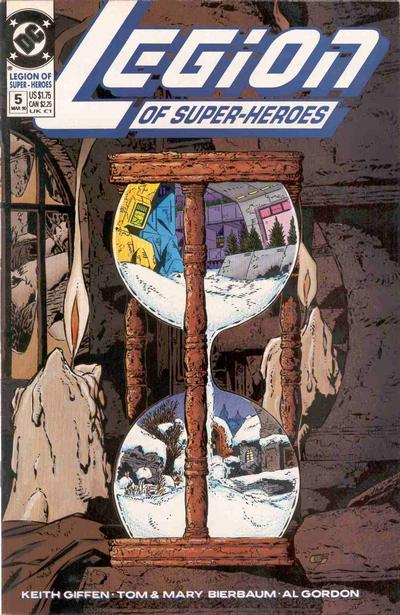
Legion of Super-Heroes Vol 4 #5
Oh, it's a long story. But basically a crazy wizard manages to fuck up history so that magic defeats technology up until even the 30th century. So this single issue is the Medievalized versions of the superheroes trying to get their timeline back. Keith Giffen manages to do what Mike Mignola couldn't and creates the most convincingly Lankhmarish visuals in comics history.

Some people thought Keith Giffen's run on Legion was too dark, too dense, too complex, and too hard to understand. These people are all child molesters. There is nothing like it in the history of comic book storytelling and if we had to lose a few illiterate waterheads off the fanbase in order to see it, then those are the risks of the culture business.

Many more people have never even heard of Giffen's run on Legion of Super-Heroes because nobody fucking reads Legion of Super-Heroes. I envy these people because they can go buy back-issues of the first few years of Legion Volume 4 and be extremely surprised and confused and engrossed and happy for a few days in a way that's otherwise fairly difficult to do without taking off your clothes, leaving the house, getting fat, or paying some creep with weird facial hair for a carefully-titrated helping of something illegal.


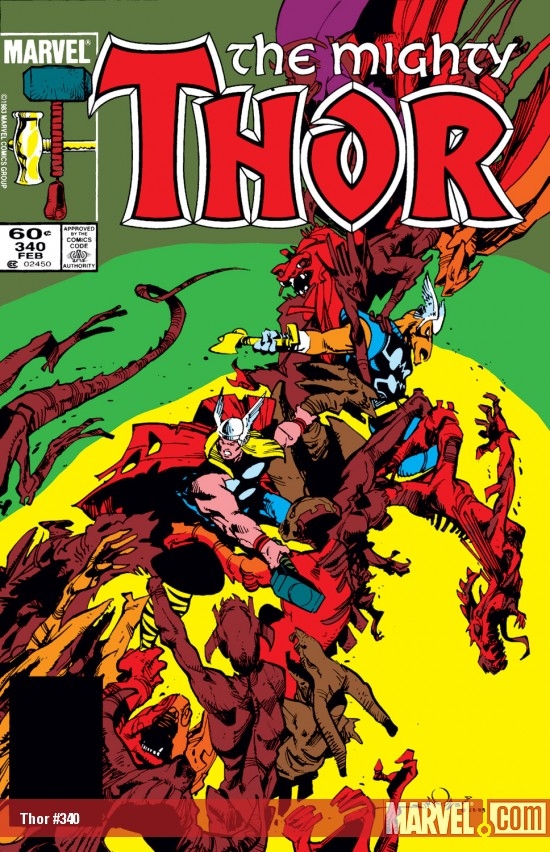
Thor #337-#367
Walt Simonson's run on Thor is exactly what level 15+ D&D should look like: Fire demons and usurpers and lone heroes mauling legions and hordes and bad elves and sound effects that take up half a panel and galaxies on fire and visuals like Viking tracery in a pinball machine. It was worth Stan and Jack making a beardless nordic Superman ripoff with a wingy helmet and six dots on his red-caped costume just so Walt could turn it into this. Check it.

Years later, Simonson did Elric, it didn't work.


Sandman #50
Neil Gaiman's stories always work best when the artist inspires the dizzy wonder he wants you to feel and P. Craig Russel's take on Arabian-Knights-era Baghdad is as dazzling as it needs to be. Planescape fans also must read Gaiman's "Season of Mists" storyline. It is pretty much exactly where Planescape came from. Plus Kelley Jones drew it, so even if you disagree, hey, Kelley Jones.

Speaking of Kelley Jones: Batman: Red Rain is Batman + Dracula so kinda maybe you have to read that and Jones' Deadman is full of horrific-pretty-much-even-the-end-table-looks-like-a-zombie KJ visuals.

_________
There are, of course, many other comics that deal with the fantastic. Did I hear about (your favorite one here)? Bone? Red Nails? Prrrrobably. Did I like it? Probably not, otherwise it would be here in this list. But if I haven't, I'd love to check it out. Good comics are hard to come by.

Sunday, November 27, 2011

It Came From White Dwarf!

Random notes from lying in bed reading the World's Once Greatest Hobby Magazine...

-First, here's a half-finished dungeon using only pictures from White Dwarf 1-9 or pictures of (disturbing) minis that I tracked down from them being advertised in 1-9...
(Click to enlarge.)
(Note walktopus.)

-Magazines. Your blog--wait, statistically speaking, if you're reading this you don't have a blog. anyway, blogs--are magazines. Like this here you're reading is the opening editorial. Then over on the right there we have my departments. The only difference is: lots of things you can probably figure out without my help. Point is you can see all the brains that will be making the next generation of RPGs here in the magazine's bylines. Steve Jackson, Ian Livingstone, John Blanche...

-Quote I just got in the mail from A Certain Game Development Professional Who Reads D&DWPS:

Just read your follow-up to the pay thing. You are 100% right.

You could argue that the entire business history of D&D has been an ongoing, losing fight between a company trying to treat D&D like a publishing business and a fan base that wants to treat it like a hobby.

-Discuss?

-Speaking of White Dwarfs, has anyone seen the new Ricky Gervais show with Warwick Davis? Is it any good?

-Hot.

-Judging from the reviews and ads, the number of kinda wargame/kinda boardgames (like Divine Right) from this era is staggering. I wonder if the current resurgence of this kind of game (Small World, Carcassone, etc.) coincides with the re-interest in old school D&D? I mean, I wonder enough to post on the internet about it, not enough to actually, y'know, do the research.

-White Dwarf #13 contains an Houri character class all about creepy what-lonely-'70s-GM-dreamed-this-up sex magic. In a game it would just go to terrible and tedious places, but it's actually a decent character idea for a story. Or a tentacle porn. Brian Asbury you were working in the wrong medium.

You could also profitably pull a spell like Kiss of Disfigurement off the houri list on a scroll to add optional hilariousness to an intrigue-heavy setting.

-Holy fuck! How much of the '70s does this explain:
?

Saturday, October 1, 2011

Fine, Nerds, I Will Explain About Starfire

QUIZ TIME


1. What's wrong with this comic? (PICK THREE)

A. The characters are so rigid they look like the artist shoved the blunt end of a pencil in a piece of ham and just moved the ham around over a piece of Bristol board until it looked kind of like people.

B. The dialogue sounds like it was written by someone who has literally never heard a human speak the English language.

C. The combination of these things (A and B) makes the subject of this comic--a homosexual superhero--look like a complete tool, and so manages, unfortunately, to link the fact that he is a complete tool to his sexual preferences in the reader's mind.

D. OMG THEY MADE NORTHSTAR GAY! CHANGE HIM BACK!!!!!!!!!!!!!!


2. What's wrong with this comic? (PICK THREE)

A. The characters are so rigid they look like the artist shoved the blunt end of a pencil in a piece of ham and just moved the ham around over a piece of Bristol board until it looked kind of like people.

B. The dialogue sounds like it was written by someone who has literally never heard a human speak the English language.

C. The combination of these things (A and B) makes the subject of this comic--a promiscuous superheroine--look like a complete tool, and so manages, unfortunately, to link the fact that she is a complete tool to her sexual preferences in the reader's mind.

D. OMG THEY MADE STARFIRE A SLUT! CHANGE HER BACK!!!!!!!!!!!!!!


(Answers: A: 1,2,3 B: 1, 2, 3)

Tuesday, September 20, 2011

Notes While Reading/Watching Various Things

Keep On The Borderlands:

Cover:
Third person view meant either to put you in the position of one of the adventurers or show you their butts. Monster stands on egg, shot with arrow. Apparently simultaneously with some guy in red Bowie pants shooting someone off the canvas to the left. Blue nosed baboon in armor fighting my mom's ex-boyfriend. Pretty purple tree by Bob Ross in foreground. None of its roots are in the ground. What the fuck?

If I knew nothing else about this module, I would never ever buy it. "Keep" is not as exciting as "Evil maze" and "Borderlands" is not as exciting as, well, any other word, pretty much, except "Shadowfell" which word it is way more exciting than and which word WOTC replaced it with when they redid this module because "Shadowfell", like 80% of all post TSR D&D neologisms sounds like a band that some girl you went out with dated the keyboard player of before she decided the fit-of-alcoholic-rage-to-orgasms-provided ratio was too high to justify keeping it up. Also all the people on the cover look like they're made of Gummi.

Let us, however, not judge books by covers. Even if it does say "It has been specifically designed for use by beginning Dungeon Masters so that they may begin play with a minimum of preparations" concerning which claim: Really? Really?

Now there's a map. It looks like a big blue dungeon map with a plesiosaur swimming up under it.

Now a picture of some guys who don't seem to be taking their job very seriously fighting an owlbear. That's...that's fine. I guess. Sure. Let's not bait the owlbear fans just yet. Journalistic integrity does force me to point out that his thing looks more like a fat ostrich in a gorilla suit with a tail.

The guy on the left is like "Hey I'm a halfling but this owlbear doesn't see my glaive-guisarme and I'm as tall or taller than all these humans. Fuck yeah." That's what his smile says to me.

Publishing information, typos...

Introduction...
" You are about to begin a journey into worlds where...adventure and heroism are the meat and drink of all who would seek their fortunes in uncommon pursuits."

Wow that's some special gibberish. And only two sentences in.

The old clustery TSR typesetting has a oozing quality I expect some enterprising graphic designer to build an ap to ape any day now. Every OSR blogger will use it. Unless their name is "Clint", because then if they wrote it in all caps it would look like it said...something else.

Certainly there are stout fighters, mighty magic-users, wily thieves, and courageous clerics who will make their mark in the magical lands of D&D@ adventure. You, however, are above even the greatest of these, for as DM you are to become the Shaper of the Cosmos. It is you who will give form and content to all the universe. You will breathe life into the stillness, giving meaning and purpose to all the actions which are to follow

DON'T GIVE ADVICE TO CHILDREN WHILE INHALING BAD DRUGS.

Page 5, picture: Elric turning man in bellbottoms and birkenstocks upside down while hydrocephalic child and homosexual wearing a codpiece and a wingy-helmet backwards watch. Inexplicable.

Background:
Yet again, Gary purposely opens a section with a total linguistic fuckwreck
"The Realm of mankind is narrow and constricted. Always the forces of Chaos press upon its borders, seeking to enslave its populace, rape its riches, and steal its treasures."

If they're metaphorically "raping" the riches then why...forget it, this can't end anywhere good.

And, this is, technically, meant to be read aloud to players. On their first adventure. So yeah, rape already. No wonder the Jesus Moms threw a fit.

Me myself personally I would be throwing a fit because holy hell five paragraphs of read-aloud text. "Farms and towns have become less frequent and travelers few. The road has climbed higher as you..." This intro would be two pages 12-point double-spaced and it's longer than every single entry in this blog.

It's funny how they always capitalize KEEP ("information from inhabitants of the KEEP might be gained by player characters.") Try talking like that.

There is a table of rumors. The interesting ones--there's a wizard, there's a princess, there's awesome treasure, bugbears fear dwarves, and a translation of a goblin phrase--aren't true. All the ones that say "standard D&D monster x is in y part of the caves" are true.

Now some Gygaxian descripto-blocks. There are always 5-8 (d4 + 4) lackeys inside tending to horses and gear. Each is unarmored (AC 9) but can fight with various available weapons (pitch forks and thezzzzzzzzzzzzzzzz While painfully inefficient, these can maybe be excused by the need to lay things out in a beginners module "see, nothing in this tower is surprising or hard to invent or very creative, a 12 year old could do this--you're 12, go make your own!" and they're practically haiku compared to the let's-pad-swatting-a-fly-into-a-12-page-mini-sandbox lunacy you got later.

On page 9, you get the first awesome thing in the KEEP. The priest...he's a jovial talkative 18 hp fuck laden with magic items with two creepy silent assistants "He is outspoken in his hatred of evil, and if approached by a party of adventurers seeking the Caves of Chaos, he will certainly accompany them. " And then betray them.

Thus teaching the PCs several valuable lessons about bringing along henchmen whose stats are listed in the book, religious people who are "outspoken in their hatred of evil" and trusting the thief when he suggests backstabbing anyone with magic items as soon as they have the chance. Gary doesn't say the priest in his "well-appointed and comfortably furnished" chambers with his "cozy fire" and his "robust" young acolytes is likewise outspoken in his hatred of gay buttsex but I think we can consider it implied. Dude, it's ok, I can ask, you can tell, times have changed, step into the goddamn 10th century, evil priest.

Now back to the standard descriptibricks. The rooms have normal furnishings, but a jar hidden in the smith’s bedroom holds 27 electrum pieces. Thanks for that. Thanks so much for that.

Many people have pointed out the following incongruity: despite the fact that the module is so handholdy it re-explains everything about how to DM from the original books--going so far as to generously waste a few pages re-printing the rules--and tells the PCs they're heroes and they're going to explore the caves and fight bad evil and what-all, it doesn't at all mention the fact that the KEEP itself is fucking loaded with treasure and described in numismatic and fortificatory detail nobody would need to know unless they were breaking into it. Everybody has all kindsa theories about why it's there--like it's just because Gary gave everything stats and potions or he was expecting the DM to run a bandits-attack-and-PCs-defend adventure (suggested in the module) or because the KEEP itself is the secret objective of the module or some other thing. It's the Hath not a Jew hands speech of D&D lore. At any rate, planning and pulling a heist on the KEEP has always seemed like a lot more stylish of an adventure to DM than watching people killing a lot of stacks of hit points with slightly different heads.

Then we have the section with the stuff-between-the-KEEP-and-the-Caves in the wilderness. As everybody always points out, his is all very good and right because it makes the KEEP into a proper mini-sandbox, but I just keep thinking there is so much goddamn empty space on the map where you could've written in all this information so I wouldn't have to turn back here.
"10 Lizard men AC 5, HD 2 +1, hp 12,10,9, 8,7, 5, #AT 1, D 2-7, MV (20’)" then a little arrow. How hard is that? But that's probably just me.

Another minor mystery: "One by one, males will come out of the marked opening and attack the party." What is this, Missile Command? How did lizard men not die 3 months into the Hyborian Age with this grasp of tactics?

Picture: bloated tree with weird retro-Tiki Saul Steinberg-looking guy hiding behind it.

Now the caves themselves. After 287 words of read-aloud text we have the best things about the caves: notes on monsters ransoming players, learning from the PCs' tactics, etc.

HOBGOBLIN LAIR: Skulls are lined along the walls, and several are affixed to the oaken door to highlight a warning written in common runes: “Come in - we’d like to have you for dinner!” Only the gods of the Hindus have enough faces and enough hands with enough palms on them to put together an appropriate response to this. Welcome to a magical land of pure imagination.

The Debt (american version of Israeli spy movie)(spoilers!)

-Mission: 1. Disguise yourself. 2. Get into enemy territory. 3. Kidnap foe. 4. Return him/her/ it to home.

-Practice remembering your stupid cover story.

-Returning is by far the hardest part.

-Guards here at this time, do this, hide here, chew away fence slowly during these intervals, then hop on this mode of transportation at exactly this time.

-The target needs to be kept alive for a long time and doesn't want to be.

-The cover story arranged by the NPCs is embarrassing but arranged so's it's easier than anything else.

-Failure to perform mission will bring the shit down on PCs, but patrons have no way of knowing they failed. Are PCs willing to falsely accept credit? Probably. However, there may be consequences down the line.

-Lie PCs tell about their exploits is inspiring tale of heroism to their friends and family.

-Old army pal shows up with a "Hey, remember that job we did back in the day? Well..."
story.

-Innocent NPCs wander in while PCs are sneaking around.

-Magic candle detects when things have been recently touched.

The Brotherhood of the Wolf (french 18th-century kung fu movie)(spoilers!)

-Locals unable to describe target of monster-hunt properly

-Toughs hired to sort out same problem as PCs terrorize locals

-Naturalist and bodyguard as core of party

-Classical statues with boar heads and goat heads

-Fancies ask PCs about their previous adventures (over dinner?). Think descriptions of owlbears, giant beavers, etc. are high-larious.

-Locals subject PCs to boxing/wrestling/pankration contest, 2-on-1, then 3-on-1.

-Everybody has an animal totem, though they don't know it. Someone can read them. Some are funny.

-Twisting animal horn used as stock/stabiliser on crossbow or firearm.

-Handheld "Wolverine claw" as melee weapon

-Church service interrupted by hysterical villager reporting monster attack.

-PCs are taken off the job and replaced. However, the fruits of success are too good to give up.

-Person poisons someone with slow-acting poison every morning, then gives them antidote every night. Keeps them around.

(-Love interest turns out to be hot, scantily-clad witch? Like you hadn't already thought of that.)

-Local holymen suspicious/jealous of party cleric.

-Jerk NPC tries to bribe/blackmail/threaten PCs into pretending they successfully completed their mission, even though they didn't.

-Same NPC shows up regularly--after every delve/day of searching, etc.

-Creepy flesh-golem-armor sheathes mundane trained war animal.

-Villains' secret lair detectable via detective-style "where on the map is the center of this mayhem?" inductive reasoning.

-Fast, simple, but difficult-to-execute ritual will buff PCs for final battle.

-Feign death potion.

-Woman's fan with blades attached.

Monty Python and The Holy Grail

It takes place in 932 ad. I did not remember that.

God looks like a terrorist.

I can't tell if this movie is no longer making me laugh because I've seen it so many times and heard every line in it a million times or because it's just old.

Ok, Tim is still funny. As are mooses.

Your Highness:

-How busy are we? So busy we didn't see this. Or Sucker Punch. Maybe you can imagine me not seeing Sucker Punch. But Mandy not seeing Sucker Punch? That's crazy...

-Mandy: unrated version? Z: it probably has tits. Mandy: Let's watch the unrated version...

-halfling jokes never get old. they're short!

-The tracker henchmen's Amadeus hair is always funny

--dude, he's dating belladonna?

-Seth Rogen's (NO WAIT THAT'S DANNY MCBRIDE) expressions are like half the movie

-"Magic...motherfuckers!" Please don't ruin that one for me, internet...

-"This is Fabius's 28th quest, how many have you performed?" that's so 4e

-"I hope this adventure is not too dangerous or boring"

-The part where the princess is like locked up and then the guy's all "It's Fabius, I'm here to save you!" and then is all "No! Its' me! your still a prisoner! I couldn;t keep it up, it was too mean" That's great, I don't care what you say, that's great.

-This quest sucks

-Wait was that Powerball:blind. That was d4 rounds per foe.

-that thing where the henchman betrayed him--that totally never happens to me but i always worry it will. In reality, my henchmen just show up and fight a little and die. Every time. I really hope those guys don't have a union.

-Evil wizard's feast room rocks and i want it

-This whole Martiti Sequence is noteworthy for any number of reasons:

*I realize Martiti himself--the effete, overweight, overlord of the barbarians--is supposed to be kind of So-Wrong-It's-Funny but the casting just came out Holy Hell So Off And Awkward in a weird side drawer level rarely reached by movies with budgets this big. I can barely look at the guy.

*The whole bowl-you-put-your-hand-in-and-it-comes-out-a-giant-salamander-spotted-hydra-thing-in-the-arena thing is awesome and I wouldn't be surprised if this part of the script started life as someone's way cool D&D campaign idea that they always wanted to have in a movie and then they were like, hey, let's just stick it in this stoner movie, otherwise my genius will never see the light of day. In the alternate universe where Stalin never existed and "Creep" was Radiohead's last song, this thing is in a whole other, better movie with Benicio Del Toro in it.

*Jesus hot amazon chicks everywhere. Scratch that thing I said about Benicio Del Toro--there's no good reason to put guys in any movie ever.

-"Maybe some other plan, with...nets or something?" Nets are underrated. They're not even on the Type I equipment list and in Type IV--well let's not even talk about all the ways you can't use a net in Type Iv.

-Courtney rocks.

-...and he can pick pockets...

-if they were smart they woulda brought a grappling hoook so they can stand on top of the labyrinth. Seriously it's a good thing minotaurs don't know about ladders.

-And it would be awesome if jennifer connelly suddenly came around the corner.

-i see they're coming down on the side of "furry darwinistic minotaur" rather than "man-chest with nipples" greek minotaur. Perhaps for the best. If you can't beat Time Bandits don't try.

-I had a whole bunch of notes here, but they all basically boil down to: my actual D&D game where KK's character actually shoved a unicorn horn into Satine's PC's corpses' ass because she actually thought maybe that would bring her back to life is way better than the string of unicorn horn/dick jokes that start here and run til the end of the movie because someone in Hollywood thought they were actually funny.

-Dead henchmen dies roughly the same way kk's last dog did

-it's much less funny once the guy gets the unicorn sword

-ok, having 3 mothers is pretty disturbing

-smacking them into each other so they turn into one is a tactic from a video game called Disgaea

-seriously are all stoners this obsessed with dicks in their ass? ok, the ones I know are, but it's their job.

-the story necessities made it worse--waiting for whatshername to fall in love w/ whatshisname, and for whathisname to learn to be a hero and to love his brother...blah blah. Nobody cares about your goddamn predestined character arc.

Friday, September 16, 2011

New Old Magic Item

It was a tape of human skin, cut from the silhouette of the dead man. That is to say, the cut had been begun at the right shoulder, and the knife—going carefully in a double slit so as to make a tape—had gone down the outside of the right arm, round the outer edge of each finger as if along the seams of a glove, and up on the inside of the arm to the arm-pit. Then it had gone down the side of the body, down the leg and up it to the crotch, and so on until it had completed the circuit of the corpse's outline, at the shoulder from which it had started. It made a long ribbon.

The way to use a Spancel was this. You had to find the man you loved while he was asleep. Then you had to throw it over his head without waking him, and tie it in a bow. If he woke while you were doing this, he would be dead within the year. If he did not wake until the operation was over, he would be bound to fall in love with you.

--Once and Future King,
TH White

Monday, August 29, 2011

Avant-Garde Architectural Theory, Meet Megadugeons

A megadungeon (or "campaign dungeon") is a dungeon complex that is both the focus of a campaign -- a 'tent pole," as explained in the post to which I linked above -- and too large to ever be "cleared" by even several parties of adventurers. Megadungeons are designed to be an ongoing and permanent feature of a campaign, not used and discarded like most dungeons published in the past.

-James Maliszewski

__________________


Everything in bold below is from the essay


"Bigness or the problem of Large" by architect and theorist Rem Koolhaas from the book "Small, Medium, Large, Extra-Large". Monacelli Press, New York, 1995. The entire essay is reprinted below. Megadungeon-relevant commentary inserted by me.


Beyond a certain scale, architecture acquires the properties of Bigness. The best reason to broach Bigness is the one given by climbers of Mount Everest: "because it is there."; Bigness is ultimate architecture
.


I'm not addressing megadungeons because they're there (they're not). I broach the subject because they're fun. It is also possible to argue (as we'll see below) that the megadungeon is the ultimate dungeon--not just in that it is big, but that the features unique to dungeons take on greater importance in megadungeons and the features not unique to dungeons become even less important.


It seems incredible that the size of a building alone embodies an ideological program, independent of the will of its architects. Of all possible categories, Bigness does not seem to deserve a manifesto; discredited as an intellectual problem, it is apparently on its way to extinction - like the dinosaur-through clumsiness, slowness, inflexibility, difficulty. But in fact, only Bigness instigates the regime of complexity that mobilizes the full intelligence of architecture and its related fields.


It is this "regime of complexity" that is the primary appeal of megadungeons. If you read this and are like "what complexity?" then what I mean about megadungeon complexity is here.


One hundred years ago, a generation of conceptual breakthroughs and supporting technologies unleashed an architectural Big Bang. By randomizing circulation, short-circuiting distance, artificializing interiors, reducing mass, stretching dimensions, and accelerating construction, the elevator, electricity, air- conditioning, steel, and finally the new infrastructures formed a cluster of mutations that induced another species of architecture. The combined effects of these inventions were structures taller and deeper-Bigger-than ever before conceive, with a parallel potential for the reorganization of the social worId - a vastly richer programmation.


Obviously the megadungeon is not enabled by any such technologies, however the idea of the megadungeon is informed by the new tech-aided buildings of the 2oth century--malls, megahotels, office buildings, megacruiseliners, etc.. Buildings so large the inhabitants do not have to know each other despite depending on the same resources. (The merger of these buildings and the actual megadungeon is in the Shadowrun concept of the arcology.) Important idea: many of the most uniquely-D&D concepts (that is, not inherited from Tolkien, folklore, or Conan) and ideas are those which wear the dressing of medieval fantasy but are clearly "intellectually enabled" by 20th century ideas.


Anyone who has been in a late-20th-century hospital knows what it's like to be in a building so Big and therefore illegible that it functions as a megadungeon.


Theorems


Fuelled initially by the thoughtless energy of the purely quantitative, Bigness has been, for nearly a century, a condition almost without thinkers, a revolution without program. Delirious New York (one of the author's earlier books) implied a latent "Theory of Bigness"; based on five theorems.


l. Beyond a certain critical mass, a building becomes a Big Building. Such a mass can no longer be controlled by a single architectural gesture, or even by any combination of architectural gestures. This impossibility triggers the autonomy of its parts, but that is not the same as fragmentation: the parts remain committed to the whole.


A megadungeon version of this idea: beyond a certain critical mass, a dungeon no longer can be controlled by:


A-A single dominant in-game "ruler" or "faction", and, more interestingly for us here...


B-A single story or narrative thread or even aesthetic mood. Even if the dungeon is the most pathetic box-car-by-box-car linear bullshit, the mere logistical fact that different rooms will be cleared by different groups at different times (due to the fact that probably not exactly the same group of players will show up to every session) destroys any predictable narrative development.


As a counterexample, consider a microdungeon: Raggi's Death Frost Doom. Its moodiness and "weird tale" structure is dependent on a distinct small group of PCs encountering a small group of distinct threats and obstacles in certain ways. Certain decisions or mistakes "trip" send the story spiralling off into any of a few horror-movie directions and the tight construction of the dungeon (and the suggestion in the module that it be run in one session) support this.


2. The elevator - with its potential to establish mechanical rather than architectural connections-and its family of related inventions render null and void the classical repertoire of architecture. Issues of composition, scale, proportion, detail are now moot. The "art"; of architecture is useless in Bigness.


The architectural idea is that once upon a time travel through a building could be "designed" by the architect as a sort of parade if unveiled vistas. First we see a facade (from various angles), then an atrium, then a stairwell, now a view from the stairwell, now a hallway...you could not go from part to part without experiencing the whole. Now your experience is divided up according to where the 10 minutes waiting for- and standing in- the little metal box appears in your journey.


What creates a parallel issue in the megadungeon is not the elevator but the previous delve. i.e.: the DM or author designs the movement (the crawling) from room to room as an experience--usually one of rising tension and slow discovery. However, once a room is experienced by a party, it can easily turn into "a place we already mapped" and so, on subsequent delves, this area is no longer "experienced"--and the DM has (and should have) little control over where the party finishes a session. The next session begins either:


-in the same place (but with a possibly slightly different cast of PCs, some of whom aren't familiar with the previous rooms)

-back at the surface, with all the cleared rooms as rooms to be "elevatored" past, or

-back at the surface, with all the cleared rooms to be re-experienced in a new way, not (usually) predicted by the DM when writing or prepping the dungeon


The overall effect is: just as the elevator lessens the degree to which the architect controls the experience and "reading" or a building, the episodic nature of megadungeons tends to lessen the degree to which the "reading" of a dungeon is controlled by the DM.


Every DM running a big dungeon has probably had the experience of having some players who leave a boss fight victorious but still baffled by half the dungeon's mysteries on account of having only been around for half the breadcrumb trail.


3. In Bigness, the distance between core and envelope increases to the point where the facade can no longer reveal what happens inside. The humanist expectation of "honesty" is doomed: interior and exterior architectures become separate projects, one dealing with the instability of programmatic and iconographic needs, the other - agent of disinformation - offering the city the apparent stability of an object. Where architecture reveals, Bigness perplexes; Bigness transforms the city from a summation of certainties into an accumulation of mysteries. What you see-is no longer what you get.


Koolhaas' idea here is that at one time, architects dreamed of a day when all buildings would announce their meaning and contents clearly to the public ( a legible city), all forms would announce their functions--and that this dream was annihilated once technology made it possible to have the center of a building so distant from its outer walls that the windows gave no clue to the life within and to have a building take on an exterior shape unrelated to the activities happening inside.


Now dungeons are based on this unknowability (all modern buildings are dungeons) however the idea of "exterior honesty" is important in a different way for megadungeon DMs:


It's almost impossible to get your shit together to write or buy and then properly prep a megadungeon unless you are fairly certain you are going to get to use it in your campaign. And it can be difficult, unfair and boring to put it in your campaign unless your players want to go into it--a lot. Making a megadungeon work requires a long term commitment from a lot of people. This is probably the real reason there aren't many and the few we see published aren't very complete or very good. You have to say "I am prepping a megadungeon, is everybody here ok with us doing pretty much dungeons for a few dozen sessions?" or else be running a regular game at your Friendly Local Game Store.


Thus: a megadungeon requires a commitment to commit to the unknown. "This campaign will be about...stuff you don't know what it is yet".


4. Through size alone,-such buildings enter an amoral domain, beyond good or bad.Their impact is independent of their quality.


Maybe the most interesting parallel here: just as the impact of a big building is often because it's big, not because it's good, megadungeons can be bad (that is: uninventive, unoriginal, mood-dead, aesthetically generic, bearing all the marks of creative cynicism) and still be fun, because they're big.


I ripped Ruins of Undermountain here for the "Three medusas waiting in a room" encounter (connected to nothing else important and yes, being among a million others just like it). However, I would never argue it wasn't fun to fight 3 medusas in a room. I would just say if someone was being paid to write it and you had to pay to get it from them then basic ethics demands most encounters be more than a free random dungeon generator could come up with.


(What's good dungeon design? For any DM:

-I couldn't have thought of it myself, and

-I like it.)


Point here is: the context of the megadungeon--its largeness, its disconnection from sources of resupply and succor (towns and taverns), its emphasis on basic survival needs (sleep, torches, rations), the density of its encounters, its constant intimation of something out-of-proportion-horrible about to happen--gives even "orc in a 10x10 room" a level of interestingness it didn't earn.


When you fight an orc in a 10 x 10 room after 3 hours in a megadungeon, it's mostly memorable not because it's an orc in a 10 x 10 room, but because it was after 3 hours in a megadungeon. Megadungeons are, thus far, a far better idea than what any publisher ever put in them. The megadungeon format--like whiskey, mood music and fast women--makes boring things interesting just by being there.


5. Together, all these breaks - with scale, with architectural composition, with tradition, with transparency, with ethics - imply the final, most radical break: Bigness is no longer part of any urban tissue. It exists; at most, it coexists. Its subtext is fuck context.


This isn't much of a stretch: the whole point of the dungeon is it's difference from the world above. However, more subtly: megadungeon delves are so unpredictable that, in most cases, attempts to tie them in any necessary way to the intrigues outside the megadungeon are extremely difficult. The megadungeon is not only a world apart, it is--by definition--a world that can be explored in a million different ways. While events below can be tied to the politics, disasters and dramas in the surface world after the fact, tying them to specific objectives in the world in a "get this now" sense somewhat violates the open, exploratory spirit of the thing.


This is not an ironclad rule, but there are basic tensions here:


-You have time to design and prep a megadungeon or you have time to prep and design the world aboveground and its intrigues. You very well may not have time for both. (May be why so many long-time dungeon merchants like published settings, even if they're total vanilla.)


-Either what's in the megadungeon is urgently important to the world outside it or it isn't. If it is, then the megadungeon may lose some of its "free exploration" feeling ("Just find the gold monkey and save the princess, dammit, forget the mystery portal in room 45!"), if it isn't then nothing in the world outside can be that world-shakingly important either, or else you'd be aboveground dealing with it. There are ways of dealing with this tension, but it's always a problem to be solved if a megadungeon isn't the only thing going in the campaign.


Modernization


Here begins an extended and jargon-filled historical digression I have half a mind to just skip 'cause it's sorta beside the point, but I won't because:


-what Koolhaas describes as responses to "Bigness" to some degree mirror the responses to D&D's idea of dungeoneering-as-central-to-RPGing


-examinations of things which aren't dungeoneering throw some light on the appeal of dungeoneering


In 1970s, Bigness seemed a phenomenon of and for (the) New World(s).


In 1970s, Megadungeons seemed a phenomenon of and for a small group of hobbyists.


But in the second half of the eighties, signs multiplied of a new wave of modernization that would engulf - in more or less camouflaged form - the Old WorId, provoking episodes of a new beginning even on the "finished"; continent. Against the background of Europe, the shock of Bigness forced us to make what was implicit in Delirious New York explicit in our work.


In the second half of the eighties, the entire rest of the world was introduced to megadungeons via video games. Super Mario being an early standout example.


Bigness became a double polemic, confronting earlier attempts at integration and concentration and contemporary doctrines that question the possibility of the Whole and the Real as viable categories and resign themselves to architecture's supposedly inevitable disassembly and dissolution.


Now we got a lotta postmodern jargon here, but the idea for us is: despite the "cinematic" interpretation of running a game, the ideas about negotiating (rigorously imagined) physical space implied in megadungeons haven't disappeared off the radar of the popular imagination. The fun of the dungeoneers repertoire--resource management, outside-the-box-but-inside-the-system problem-solving, turning the system against itself, threat-of-death-as-spur-to-invention etc.--isn't as easily ignored as it might have once been when everyone was pretending old D&D was just a cro-magnon version of how games were supposed to work.


Europeans had surpassed the threat of Bigness by theorizing it beyond the point of application. Their contribution had been the "gift" of the megastructure, a kind of all-embracing, all-enabling technical support that ultimately questioned the status of the individual building: a very safe Bigness, its true implications excluding implementation. Yona Friedman's urbanisme spatiale (1958) was emblematic: Bigness floats over Paris like a metallic blanket of clouds, promising unlimited but unfocused potential renewal of "everything," but never lands, never confronts, never claims its rightful place. Criticism as decoration.


The architectural ideas Koolhaas is talking about here are techno-neo-utopian ideas which treat the whole city or environment as one big building--plug-in buildings, build-anywhere structures, mutifunction locations, etc.


This echoes various attempts in gaming to treat everything as a megadungeon--that is, a large-but-mappable space primarily defined by combat encounters and measured rigor. Citystate of the Invincible Overlord (every shopkeeper has levels), Ptolus (every shopkeeper is a bloodtroll), and various mostly-failed attempts to somehow turn every hex of a continent into simultaneously a battlemat and a believable wilderness space, mostly through random encounter tables which have you either fighting bears and wolves pretty much every hex or which make dragons and levelled-NPCs so ubiquitous that the world loses all its magic.


2e and 3.5 made everything measured and nailed down and then convinced nearly everyone that was a bad idea. The whole-world-as-dungeon didn't quite work.


In 1972, Beaubourg-Platonic Loft-had proposed spaces where "anything' was possible. The resulting flexibility was unmasked as the imposition of a theoretical average at the expense of both character and precision-entity at the price of identity.


Basically: drow-and-mind-flayers-everywhere "world-as-dungeon" situations only end up showing how unique and unreproducible a real megadungeon situation actually is.


Perversely, its sheer demonstrativeness precluded the genuine neutrality realized without effort in the American skyscraper.


By creating situations where monsters serve a specific and integrated function in the aboveground world as a way to make the game about more things than just dungeons, what ended up happening more often than not is the true "they could be or want anything, who knows?" situation created by having most monsters be mysterious denizens of a "meaning-neutral" underworld was lost.


So marked was the generation of May '68, my generation, supremely intelligent, well informed, correctly traumatized by selected cataclysms, frank in its borrowings from other disciplines- by the failure of this and similar models of density and integration-by their systematic insensitivity to the particular-that it proposed two major defense lines: dismantlement and disappearance.


Translation here: gaming had two responses to the failure of dungeoneering to meet everyone's gaming needs...


In the first, the world is decomposed into incompatible fractals of uniqueness, each a pretext for further disintegration of-the whole: a paroxysm of fragmentation that turns the particular into a system. Behind this breakdown of program according to the smallest functional particles looms the perversely unconscious revenge of the old form- follows-function doctrine that drives the content of the project--behind fireworks of intellectual and formal sophistication--relentlessly toward the anticlimax of diagram, doubly disappointing since its aesthetic suggests the rich orchestration of chaos. In this landscape of dismemberment and phony disorder, each activity is put in its place.


This is the narrative approach: physical structures aren't important--what players do in them is. Though in reality, they are obeying an entirely different order: order imposed by ideas about how story arcs and character development work. Old Blah blah blah on this subject here.


The programmatic hybridizations/proximities/frictions/overlaps/superpositions that are possible in Bigness-in fact, the entire apparatus of montage: -invented at the beginning of the century to organize relationships between independent parts-are being undone by one section of the present avant-garde in compositions of almost laughable pedantry and rigidity, behind apparent wildness.


Translation: "Some people make games that try way too hard to promote specific values". But, really, fuck those people. They aren't reading this--they can't read.


The second strategy, disappearance,transcends the question of Bigness- of massive presence-through an extended engagement with simulation, virtuality, nonexistence. A patchwork of arguments scavenged since the sixties from American sociologists, ideologues, philosophers, French intellectuals, cybermystics, etc., suggests that architecture will be the first "solid that melts into air"through the combined effects of demographic trends, electronics, media, speed, the economy, leisure,the death of God, the book, the phone, the fax, affluence, democracy, the end of the Big Story...


Preempting architecture's actual disappearance, this avant-garde is experimenting with real or simulated virtuality, reclaiming, in the name of modesty, its former omnipotence in the world of virtual reality (where fascism may be pursued with impunity?).


Translation: World of Warcraft and its cognates. The physical mapping and full descriptive rigor of a megadungeon isn't important in these situations, only the experience of being in one.


Maximum


Paradoxically, the Whole and the Real ceased to exist as possible enterprises for the architect exactly at the moment where the approaching end of the second millennium saw an all-out rush to reorganization, consolidation, expansion, a clamoring for megascale.


All the concentration and craft required to produce a megadungeon was on the one hand downplayed by WOTC D&D and, on the other hand, demanded by a generation raised to think of "video game designer" as a plausible career option.


Otherwise engaged, an entire profession was incapable, finally, of exploiting dramatic social and economic events that, if confronted, could restore its credibility.


The absence of a theory of Bigness-what is the maximum architecture can do- is architecture's most debilitating weakness.


Is the absence of "Megadungeon Theory" the most debilitating weakness of megadungeons?


Maybe not, however:


No published megadungeon is that good. A body of shared knowledge about what-hasn't-been-tried-but-might-work, what's-already-been-done-so-don't-do-it-again, what-works-pretty-well-and-is-adaptable, might one day contribute to whatever the first actually soup-to-nuts inventive, original, interesting and near-maximum-fun megadungeon open to public view.


Without a theory of Bigness, architects are in the position of Frankenstein's creators: instigators of a partly successful experiment whose results are running amok and are therefore discredited.Because there is no theory of Bigness, we don't know what to do with it, we don't know where to put it, we don't know when to use it, we don't know how to plan it. Big mistakes are our only connection to Bigness.


Because nearly every published megadungeon is little more than a sprawling trail of disconnected rooms designed by crazy wizards containing devices hidden in random dungeon features that do a little bit of damage what we know about how to actually make a megadungeon work any other way is limited.


But in spite of its dumb name, Bigness is a theoretical domain at this fin de siecle: in a landscape of disarray, disassembly, dissociation, disclamation, the attraction of Bigness is its potential to reconstruct the Whole, resurrect the Real, reinvent the collective, reclaim maximum possibility.


Maybe you really like your crazy wizard dungeons full of devices hidden in random dungeon features that do a little bit of damage but can you argue with wanting to reclaim maximum possibility? No you cannot. There is no devil's advocate position for Think Harder And Be More Creative. There's more than one way to skin a cat, and it would be nice to get at least 2 or 3 more methods on the dissecting table.


Only through Bigness can architecture dissociate itself from the exhausted artistic/ideological movements of modernism and formalism to regain its instrumentality as vehicle of modernization. Bigness recognizes that architecture as we know it is in difficulty, but it does not overcompensate through regurgitations of even more architecture.


It proposes a new economy in which no longer " all is architecture," but in which a strategic position is regained through retreat and concentration, yielding the rest of a contested territory to enemy forces.


Ignoring the rhetoric and focusing on the end bit there: to commit to a megadungeon in a campaign means other things aren't going to get worked on. This is perhaps the toughest hurdle for everybody: the commitment on the part of GM and players--this thing is definitely gonna get explored, so it's defintiely gonna get prepped and/or written.


Beginning


Bigness destroys, but it is also a new beginning. It can reassemble what it breaks. A paradox of Bigness is that in spite of the calculation that goes into its planning -in fact, through its very rigidities-it is the one architecture that engineers the unpredictable.


We all know this. Despite the attention to torchlight, distances, hit points, armor class, encumbrance and all the fiddly bits, it is this attention to detail which makes what happens on the dungeon so unpredictable. Oh if only you hadn't run out of oil...oh if only you hadn't slept in the shrine... Since you pay attention to details, any one of those details can fuck with any other one of them.


Instead of enforcing coexistence' Bigness depends on regimes of freedoms, the assembly of maximum difference


Translation: the isolation and largeness of the megadungeon allows for the antlion to lay down next to the spiderlamb. (Without spoiling the verisimilitude of the world above.)


Only Bigness can sustain a promiscuous proliferation of events in a single container. It develops strategies to organize both their independence and interdependence within a larger entity in a symbiosis that exacerbates rather than compromises specificity. Through contamination rather than purity and quantity rather than quality, only Bigness can support genuinely new relationships between functional entities that expand rather than limit their identities.


"Through contamination rather than purity and quantity rather than quality"--there you go. The Megadungeon is exciting precisely because you do not know what story your 2 fighters, 2 clerics and a dwarf will hitch up between what independent factions while careening through your deathmaze in search of filthy lucre.


The artificiality and complexity of Bigness release function from its defensive armor to allow a kind of liquefaction; programmatic elements returns with each other to create new events-Bigness returns to a model of programmatic alchemy.


The ogre wants this, the witch wants that, they know each other because of you.


At first sight, the activities amassed in the structure of Bigness demand to interact, but Bigness also keeps them apart. Like plutonium rods that, more or less immersed, dampen or promote nuclear reaction, Bigness regulates the intensities of programmatic coexistence.


Although Bigness is a blueprint for perpetual intensity, it also offers degrees of serenity and even blandness. It is simply ; impossible to animate its entire mass with intention. Its vastness exhausts architecture's compulsive need to decide and determine. Zones will be left out, free from architecture.


To quote Borges: "A memory of unspeakable melancholy: at times I have traveled for many nights through corridors and along polished stairways without finding a single librarian."


Team


Bigness is where architecture becomes both most and least architectural: most because of the enormity of the object; least through the loss of autonomy -it becomes instrument of other forces, it depends.


Unlike a palace or temple or castle, a megadungeon isn't defined by what it was built for, it is defined by what's going on in it.


Bigness is impersonal: the architect is no -longer condemned to stardom. Even as Bigness enters the stratosphere of architectural ambition-the pure chill of megalomania -it can be achieved only at the price of giving up control, of transmogrification.


Possibility: because of all the difficulties of producing one, the first actually good and publicly-available megadungeon may have to be a collective effort, not an individual one.


It implies a web of umbilical cords to other disciplines whose performance is as critical as' the arehitect's: like mountain climbers tied together by lifesaving ropes, the makers of Bigness are a team (a word not mentioned in the last 40 years of architectural polemic).


Maybe we'll have to work together. People make monsters, people make trick rooms, people make triggered events, people make maps, people make tables.


Beyond signature, Bigness means surrender to technologies; to engineers, contractors, manufacturers; to politics; to others. It promises architecture a kind of post-heroic status--a realignment with neutrality.


The serial and unpredictable nature of megadungeon exploration suggests a lessening of tight control over the aesthetic of the dungeon. An attention the engineering and organization of tools for possible experiences rather than a dedication to a single kind of experience.


If the megadungeon does become a truly collaborative project, then you have to be even more open to the possibility of aesthetic swerves--from the gritty to the spooky to the whimsical to the nerd-puzzly to the hack to the slash.


Bastion If Bigness transforms architecture, its accumulation generates a new kind of city. The exterior of the city is no longer a collective theater where "it" happens; there's no collective "it" left. The street has become residue, organizational device, mere segment of the continuous metropolitan plane where the remnants of the past face the equipments of the new in an uneasy standoff.


As stated earlier: true dedication to the megadungeon is going to deplete attention to the rest of the campaign. The tavern just turn into a meeting place. We know all this.

Bigness can exist any where on that plane. Not only is Bigness incapable of establishing relationships with the classical city--at most, it coexists--but in the quantity and complexity of the facilities it offers, it is itself urban.


Bigness no longer needs the city: it competes with the city; it represents the city; it preempts the city; or better still, it is the city. If urbanism generates potential and architecture exploits it, Bigness enlists the generosity of urbanism against the meanness of architecture. Bigness = urbanism vs. architecture.


If the megadungeon is itself urban, this opens up the possibility of whether it can be done like the city kit: as tools for making a space rather than a space. My instinct is that this defeats the purpose in most cases. The possible portability of certain tools is not excluded...


Another important consideration: relationships between cities and other cities are essential to the nature of cities. Relationships between megadungeons are--at best--an underexplored phenomenon.


Bigness, through its very independence of context, is the one architecture that can survive, even exploit, the now-global condition of the tabula rasa: it does not take its inspiration from givens too often squeezed for the last drop of meaning; it gravitates opportunistically to locations of maximum infrastructural promise; it is, finally, its own raison d'etre. In spite of its size, it is modest.


We all know this about megadungeons: of any adventure format, they require the least outside context to function.

Not all architecture, not all program, not all events will be swallowed by Bigness. There are many "needs" too unfocused, too weak, too unrespectable, too defiant, too secret, too subversive, too weak, too "nothing" to be part of the constellations of Bigness.


And not everything can fit in a megadungeon.


Bigness is the last bastion of architecture-a contraction, a hyper- architecture.

The containers of Bigness will be landmarks in a post-architectural landscape-a world scraped of architecture in the way Richter's paintings are scraped of paint: inflexible, immutable, definitive, forever there, generated through superhuman effort. Bigness surrenders the field to after-architecture.


The megadungeon is the exaggeration of every possibility unique to the dungeon. The crawling, the darkness, the unknown, the trapped, the unfamiliar.


Problem: Once we do a megadungeon right, it'll be done. Then we'll have to figure out how to do everything else.