Monday, January 9, 2012

Do You Have Asperger's Syndrome?

I once had a friend who couldn't spell.

Not like normal can't spell, but like over-the-top insayne hadd too sownd out eetch lettr and than tipe it evry time couldn't spell.

Learning disability.

And he was in a business where text messaging and chatting and doing shit fast was the best way to get things done-so spell check was not an option.

In real life he was an intelligent and articulate sounding person, but on the page his disability (plus a sort of tendency toward oblique hipster code, perhaps developed over time as a defense mechanism around his spelling) made you expect--if you never knew him--that you were about to meet Bennett.

But despite all this trouble living in a wired and therefore text-centric world, he did a fine job of it and did well and convinced many people to do many things via the written word and was eminent in his field.

His secret was: he told you that he couldn't spell. First message he'd go: "Sory I hav a lerning disbility I cant spel, forgive me. Now onto bizness: wear will you be on tha 25th?"

And it worked fine. People didn't assume he was a moron or too lazy or disrespectful to run spell check, they just went, oh he has that thing, let's move on.
__________

So now Asperger's Syndrome.

I don't have it, nor do I know anyone in real life who does. Or knows they do anyway.

What I knew about it before I started D&D blogging comes from Mandy--who is an expert on all physical and mental maladies--and a Fantastic Four comic book.

(For those of you who don't know, the shorty is: Asperger's Syndrome is a kind--maybe range--of subtle autism that makes people think kinda like robots and have a hard time socializing. I hope I got that right, apologizing in advance if I didn't.)

Anyway, I don't know if it is provably true that the D&D community contains way more people with Asperger's than the art world, the porn world, or the literature world but I sure know that my email inbox contained zero references before this blog existed and now it comes up all the time. Anecdotally: I have way more contacts from outside the D&D world than in it but all references I've heard to the syndrome are within that social circle.

So: some people with Asperger's are really cool. They send me stuff, they talk to me about what they're working on and what I'm working on and are usually indistinguishable from everyone else aside from maybe they send longer emails. And they appreciate rigor and precision, which is always nice.

(A few have weird reactions to my art. There is apparently some connection between autism and the perception of detail and a handful of people with autism tend to have an intense-love or panicky-fear reaction to my more elaborate pictures.)

However, once in a while we have a conversation like this:

Them: "(something I don't understand)"
Me: "I don't get it. How does (whatchamajigger) relate to (whosamacallit)?"
Them: "(Wall-of-text-that-sounds-technical-but-is-actually-easy-to-understand-but-doesn't-actually-explain-anything)"
Me: "Thanks, I know that already. But I still don't get how blah blah blah"
Them: "(Exact same wall of text)"
Me: "No, I mean I know that, I don't think you're listening, I just...Ok, this might be an Asperger's thing."
Them: "Yeah, probably, skip it."

What's striking about this conversation is that, other than the last two parts, this conversation precisely resembles the beginning of an insane, endless Internet argument.

This is because, this behavior--
"Request for explanation"
"Explanation"
"Request for clarification of explanation"
"Exact same explanation again ignoring what you just said"

--is, outside Asperger's, mostly commonly found in:

-Idiots
-People who are hiding something and hoping that if they just keep saying the same thing over and over the other party won't notice (most notably politicians and press agents)
-Internet trolls

Of course, these email exchanges with people I've met do not result in insane internet arguments because I know the person I'm talking to has Asperger's. Because they said it. So it's cool and whatever.

This is presumably a known fact within the Asperger's community but I'll just reiterate it here: if the person you're talking to (even online) doesn't know you have Asperger's then it is very easy for certain conversational tics to be mistaken for idiocy, bad faith, or trolling.

Now, from what I understand, five things are true:

-Within the Asperger's community, socializing on-line is generally pro-indicated as a way of meeting people and having conversations in a less risky environment
-A lot of people in the RPG community have Aspergers
-A lot of people in the RPG community get into fights over interesting-but-not-important things because one party thinks the other is an idiot, a liar, or trolling
-The local cluster of people around the OSR and DIY D&D communities is a bunch of cool people who will be understanding if you tell them you have Asperger's before getting into any kind of complex rhetorical thing with them and will understand that, despite communications problems, you may be smart, honest and talking in good faith even though it doesn't seem like it at first

Now I don't know what the official therapeutic line on it is (and maybe this is the exact opposite of what you're supposed to do, in which case I apologize now), but I'd just like to ask, on behalf of everyone in DIY D&D: if you do have Asperger's, please go ahead and say that, especially if you sense you're getting involved in any kind of heated conversation. It'll lower the temperature considerably and make things you say easier for the other person to understand and head off trouble.

And if you do that and anybody has a problem with you having AS and gives you any shit about it, they are invited to go fuck themselves. We will back you up 100%.

Friday, January 6, 2012

Appendix S

S is for "short attention span".

If you need to explain quickly what playing D&D is like to a clueless party, then I have found some entirely perfect links:

Adventure Time Episode 18 "Dungeon" (hit "continue as free user" after a few seconds)
A boy and his talking dog go into a dangerhole in order to overcome a self-imposed challenge and are aided by a very impatient pink-haired princess.

The parallels with my own game and existence are terrifying.

There is almost nothing in this that is not exactly like D&D.

This is what everything else about D&D, besides playing D&D, is like.


Bonus utility: Next time some smarthole asks you what brand of Fantasy Adventure Literature exactly is D&D meant to be simulating send them right here.

Just Add Pie

So Nine-And-Thirty Kingdoms (always worth a look) posted this method for procedurally generating landscape instantly using what he calls over there "dice-maps" and what I call over here "die-drop tables" for reasons lost to time.

Basically his idea is, you drop a handful of d6s on the piece of paper and it gives you a map of nearby stuff plus distances to it.

This first thing I thought is, for any given landscape, you could go to Google Docs, quickly make a pie chart, and stick it in the center so that you could make custom "collapsed" maps for any given continent or area. So you not only know the distance to places but their character as well. Jsut extend the pie lines out and features in that sector is that kind of thing. This took 3 minutes:Then I figured you could do this for buildings, too--though in a slightly different way. Basically you write a "destination" (i.e. interesting-stuff-having location--the kinds of things where you start drawing and think "I know I want a lich riding a wereworg in here and a pile of old tapestries but that's about it...") in each part of the pie, then the dropped dice indicate how many rooms away in each direction said feature is. The numbers that actually come up on the dice can then be your wandering monster rolls for each direction. A little ball-and-stick flowchart connecting-the dots and bam--instant dungeon. Good for when the PCs reach levels you haven't finished yet...

In other news, the second one came out as an inverted peace sign for some reason.

Wednesday, January 4, 2012

Tense Moments

Thinking about this--this isn't so much a skill system as an alternate way to use the systems D&D (and games like it) already have to adjudicate situations when you want to add tension.

So:

Skills (or "Noncombat tasks that a PC might reasonably specialize in").

Simple skill is like: there's a task and a number you have to roll, roll over, roll under.

Sometimes, though, you want to make the execution of a skill as dramatic and tense as combat.

Quick review: Why is combat drawn out in most RPG rules?

1. The stakes are generally high (life or death)
2. A partial success or failure is meaningful (injured foe or friend--this injury matters even after the combat's over)
3. The task and subtasks it consists of are fun events in-themselves, even outside of any context. At least if the DM is doing it right. (You dodge, you swerve, you slash and lose a finger and all that.)

In contrast to fighting, D&D skills in the basic rules tend to be simple--pass/fail.

Type IV introduced skill challenges, of which I know little, but which, as a player, I have experienced and not really noticed having an effect much--though I assume the idea is to create just such high-tension skill moments. Crossing the tightrope, ooo, nope, whoa, ok.. etc. the general scuttlebutt on them seems to be: the quality of them is highly dependent on GM skill.

Anyway here's my idea:

Each test either has a difficulty class (DC) like in Type III D&D (this is just like an ascending AC. A number you have to roll w/modifiers to do the thing) or if you are using a roll-under-attribute system it has a bonus or penalty associated with it (make a dex check at -2 or +3 etc.). Both are ability score based--int for making stuff, dex for tricky physical tasks, str for swimming, etc.

Like a hard task could be DC20 or it could be -5 to attribute check.

(This is all old news. This is how people already do stuff in versions of D&D.)

If you don't have the skill, it's just pass/fail. You succeed, good, you have made a tea kettle or climbed a wall. You fail, the bad thing happens, the lock seizes up, the knot uncurls, the trap fails to spring, etc.

IF you DO have the skill and you succeed, well, good. You succeeded just like everybody else.

(Still, all this is old news. Here's the new bit...)

If you DO have the skill and you fail, the DM rolls d6. If the die is over your current level, you fail. If it's equal to or below, the DM narrates some mayyyybe-it's-working type situation ("the lock is rusty but a tumbler is beginning to come loose...""you slip suddenly, but catch hold of a badger-shaped rock at the last minute..") and you have two options:

1. You can try again.

2. If the task is the kind where you can start doing it and give up half-way without catastrophic disaster (i.e. you make it half-way across the chasm and then turn back rather than just falling) you have the option to "chicken out" and stop rolling now and have things go back to more-or-less how they were before the failed roll.

If you try again:

If you succeed, good.

If you fail, the DM rolls another d6, if this d6 plus the previous d6 is over your level, you fail. If it's still under, you can try again.

etc. etc. until you run out of levels or succeed.

This means by 6th level you will obviously automatically get one reroll. By 12th level you automatically get 2 rerolls. (No need to keep track of this, the dice will make it obvious.)

Why a d6?

I figure 6th level represents the point at which you obviously are definitely reliably always a little better at your specialty than the average PC. (This is going by thief PCs in AD&D--until about 6th level you still kind of suck much of the time and using your abilities is often a bad idea.)

____

In addition to the tension factor, I also think this system will scale better at high levels than simply giving skilled PCs one-re-roll per level or +1 to the roll per level--After 4thish level everything is way easy unless the basic task has such a high DC or negative modifier that nobody unskilled could ever try it. In other words, doing it that way means you have to have a lot of walls that only a skilled person could climb, and even then you keep having to scale up the difficulty as the PC gains in power.

This system means that (since the basic roll is still just vs. unmodified attribute) a skilled PC is measurably better at doing things than an unskilled one, but does not live in a world where s/he'll start automatically succeeding and need more and more difficult tasks just for the game to justify having the PC have the skill in the first place.

(I mean--if there's a wall in a 10th level dungeon only a thief with a skill can climb then that means either the party has to have a thief or the players know on the metagame level that there must be another way in. Plus I also just find degrees of awesomeness beyond, say +6 difficult to really appreciate on a visceral level. If you get to a point on a d20 system where some PCs are at +4 and some are at +9 and anybody below +5 is actually kind of crap, relatively, I find it hard to imagine what that's like in real-world analogues. What's a +9 guy look like compared to a +15 guy? +15 vs +20? It gets kind of abstract and numerical.)

Plus no skill points to keep track of in this system. Though I like the LOTFP 6-point system, it's not compatible with the have-it-or-don't skill system already in my campaign.

____

So, anyway, this seems like a decent bolt-on for any have-it-or-don't skill class-and-level system. It requires no new things on a PC's character sheet.

And again, I wouldn't use it for every test, just when I wanted to add suspense when the consequences are a big deal.

Tuesday, January 3, 2012

Split-Column Assignment Generator

Dear Exploring Infinity,
I have no idea how I found your blog, or this nifty situation generator that you made for Firefly. I also don't know anything about Firefly other than that it happens in space and has something to do with that Buffy guy people like.

Anyway, since it seemed pretty much useful for any game, I reformatted your table in split-column format. That way, if you have to roll a new situation fast (as you often do in sandbox D&D) you can roll once and read across, or, if you have a few more seconds, re-roll again for any result you don't like. I don't know if this kind of speedy flexible table is useful in the kind of games you play (we have no followed blogs in common and your categories are all games I don't run) but it is for me, so thanks! Your table is appreciated and has been added to the archive.

Rock.

Monday, January 2, 2012

An Embarrassment of Impressive (& More Pie Charts)

Finally finished reading all the way through Secret Santicore and I have to re-say: it is very good. Like I can't think of the last time I saw anything published (for money or otherwise) that had this much stuff that was actually going straight into my game immediately.

People keep asking for The Complete _________(something other than a city)_____ Kit? Well a lot of what would go into a thing like that is right in this obscure little pdf. (And it's nice to see many of the Hack Vornheim Contest winning DMs continuing to come up with creative stuff here.)


The little details really make a huge difference here: like Jeremy Duncan's Vat Spawn character class? Ho hum more mutants, yeah yeah, weird weird--but he tells you they are immortal and their whole personality and skillset 're-boot' every 100 years. That explains so much and suggests so many possibilities. Plus the actual mutations and weirdnesses he gives them seem actually thought-out and playable rather than just the typical Dragon Magazine grab-bag of abilities-inspired-by-the-last-movie-I-saw.

Anyway, highly recommended. Again.


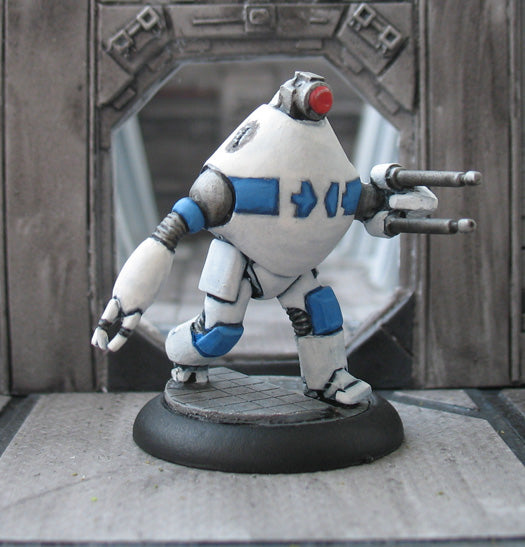
Also worth a look: Zombiesmith Miniatures appears to be producing some intriguingly Cobalt 60-ish miniatures, from what I can tell from their extremely poorly-organized site. (No offense, so far as I can tell, all miniatures sites ever are extremely poorly organized. Whats up with that?)
Aaaaand here are some entirely unrelated infographics regarding the girls' race and class choices over the course of all sessions. I have limited the info to only PCs in games I GMed in order to avoid filling my head with even more useless data and maybe accidentally crowding out things like what month it is and what city I am in.

Sunday, January 1, 2012

Games I Ran In 2011

By location, just the LA group:

Not that you care, but I just discovered the pie chart maker. Just marking time until I decide if there's any point to using one to make a drop-die chart.